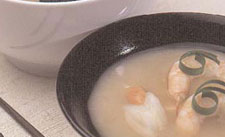
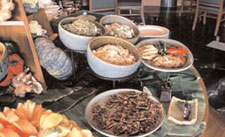
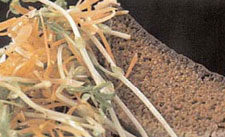
Spa cuisine – can it really be Thai? What with all those Thai delicacies such as tom kha kai(chicken in coconut milk soup), phad krapow moo (pork with basil), khao phad (fried rice) and khao niew mamuang (mango with sticky rice) being steeped in saturated fats, salts and sugars, how can these local culinary delicacies conform to the guidelines of spa cuisine?
Spa cuisine by its very nature is a low fat, low salt and low sugar form of cookery. This is not to say that fat, salt or sugar must be eliminated, but just that these elements in the normal diets are over consumed and people would be a lot healthier if they took the effort to review and subsequently reduce the quantity taken. From this one can expand into or specialise in allergy cookery and regionalised menus or even venture into totally raw food cuisine. Regardless, the basic three points are essential to the fundamentals of spa cuisine and if the rich flavours of Thailand are added, you have a winning combination from which to work.
Thai cuisine demands that only the freshness of ingredients be used. Coupled with the tradition of a high level of intensity in flavours, this means that it is relatively simple to adjust many of the traditional recipes so that they conform to the guidelines required of spa cuisine. So why is it that despite Thailand being a recognised leader in spa cuisine development the country still has relatively few outlets that have explored this opportunity? As the spa industry continues to grow, interest in all aspects of the spa culture should grow as well, and it is hoped that Thai spa cuisine will become available to a larger audience.
However, for this to happen it is necessary for the spa operators themselves to see the relevance of the cuisine to ensure that this unique element of the spa culture is developed to its potential. With the traditional aspects of spas in Thailand providing a unique basis for its development, coupled with the general social principles and caring attitudes of Thai society, it makes sense that this caring will carry through to at least some post-visit care. After all, whether a customer has spent 500 baht or 5,000 baht in a spa, they have at the very least started a detoxification process in the body. It makes no sense to then effectively stop this process with the ingestion of the unhealthy, toxin-laden foods that are normally consumed.
With Thai cuisine being in increasing demand the world over and Thai chefs being exported to Thai restaurants across the globe, the further development of the cuisine as a truly healthy one in full support of the growing spa culture in this country is a natural process. All that is required is for spas to put healthy cuisine into practice with the support of dieticians and nutritionists. While the basis of the cuisine is low fat, low salt and low sugar, with virtually no formal training available to the cooks and chefs in Thailand until the educational process is formalised, it will fall to the dieticians to guide the budding spa cuisine chefs. But it is essential that the chefs are still able to stamp their creative talents on the food within its rather stringent ingredient or quantity guidelines.
Some adjustments in thinking are required for true spa cuisine to be successful. Just changing to a simple cooking technique alone such as using shallow frying as traditionally taught will not enable Thai cuisine to develop into Thai spa cuisine. A completely different thought process is required to realise that the fats used so readily and yet widely acknowledged as being not good for the health must be significantly reduced as well in their use in the spa culinary process. With Thai cuisine, like many other Asian cuisines based on the fast-cooking process of a wok, fats and oils are used widely as a cooking medium.
This can be minimised, if not eliminated. The culinary flavour bases of chicken or vegetable stock can be utilised instead, with a slight technique adjustment, rendering the finished product a much healthier alternative and more likely than not conforming to all three rules of spa cuisine. This substitution can be carried further across a whole range of traditional Thai recipes and the cooking techniques employed. Removing the chicken skin and utilising low-fat milk instead of the more highly saturated fat of coconut milk in a traditional green chicken curry will significantly reduce the total fat content – but be warned though, you have to adjust your cooking technique as well. Low-fat milk does not like to be heated and has a tendency to ‘split’, so you will need to add corn starch or a similar binding agent to prevent this happening. This is not to say that all Thai dishes need significant adjustments. Traditional som tam is a great dish, but go light on the fish sauce and palm sugar. Eat this with your kai yang (grilled chicken) which has had the skin removed and you are definitely heading in the right direction – even more so if you combine it with brown rice instead of white glutinous rice.
Avoiding deep-fried foods is highly recommended, but if this seems to be too much of an imposition on the traditional diet, at the very least one should try to reduce the frequency of its consumption. An alternative is to bake the traditionally deep-fried foods in the oven – this will significantly reduce the fat content at the same time providing a dish that tastes very much like the original. Virtually all Thai-style yum salads comply with the principles of spa cuisine without any adjustments needed, providing one does not overdo the nam pla (fish sauce) or sugar content. There are staple Thai dishes such as tom yam, nam prik and even larb that are natural conformists of spa cuisine. Fortunately Thai cuisine does not have the negatives of most European cuisines in that it utilises little, if any, of the butters, creams and cheeses that so heavily saturate Western cuisines.
Other simple substitutes that can be found in Thai spa cuisine include apple juice concentrate instead of sugars, or if this is not available, a small quantity of real honey; fruit purees instead of jams; tamari instead of soy sauce or nam pla (better still, if you can find it, use low-salt tamari); low-fat milk (and corn starch) instead of coconut milk. Avoid deep-fried food, salted-dried food and snacks and trim all meats of visible fats before cooking including removing the skin from pork and chicken.
Increase vegetables in the meals – this has a dual role in that it naturally reduces the saturated fat content while greatly increasing the fibre, vitamins and minerals in the diet. With Thailand remaining an agrarian-based economy, the importance of the simple pleasures in life will remain. This means not only the physical importance of food but also the social aspects thereof. Meals are a time when the family is most likely together in a cohesive unit with one goal in mind – the enjoyment of food and friends. For this, flavours and textures are essential in their consideration.
Not only the hot, sour, sweet and salty flavour aspects demanded by tradition, but also the textural elements of liquids (soups), the crunch of raw salads, the pasty texture provided by the food staple of rice, the firm texture of fish and meats or the sweetness of fresh fruits.
Thailand, being one of the few countries in the world which has never been dominated by another power, is in the unique position of being able to develop a very special cuisine, and this is what has been happening for many years. With the increasing tourist trade in the country, and the toning down of traditional dishes to accommodate the tourist palate, the cuisine needs to re-establish itself to remain a true cultural icon. Fortunately many traditionalists are seeing this and resurgence in restaurants committed to serving only authentic Thai food is exploding across the globe. However, for economic prosperity alternatives need to be considered on the local front. This is where Thai spa cuisine can continue to grow. As the overall health consciousness of the society develops, so too the need to provide a more universal cuisine that is suited to today’s modern, fast-paced, yet all too often inactive world. A cuisine that will supplement and support other cuisines, yet because of the selection and treatment of ingredients, it shall remain unique.
With globalisation, there is a commitment to ensure local and regionalised cuisines see a resurgence. Thai cuisine is no exception to this – just look at the selections of foods served in a Chiang Mai restaurant compared to those offered in a Bangkok or Hat Yai restaurant. And while Chiang Mai restaurants may have a Chinese influence or those in Hat Yai have a Malaysian influence, they remain uniquely Thai. Chefs and restaurateurs know that economically if they purchase produce locally it will be cheaper and their profit margins potentially greater. Thai consumers have limited access to refrigeration in comparison to the Western world, so freshness is also a practical consideration. With Thai spa cuisine being cooked quickly (as with traditional Thai cuisine), the nutrients lost in the cooking process are minimised. So as the spa culture takes a lasting hold on today’s society, all aspects of this culture will no doubt be analysed and dissected repeatedly but the fact remains that Thai cuisine holds a unique place in the world’s kitchens and the potential for Thai spa cuisine to become a world leader in health cuisines remains unquestionable.
|








 Thai Spa Cuisine
 Beginning of Thailand's Spa